Crafting a job application email can be daunting. It’s your first impression on a potential employer.
A well-written email can open doors to new opportunities. It showcases your professionalism and attention to detail.
But how do you write an email for a job application that stands out?
This guide will walk you through the process step-by-step. You’ll learn how to write a job application email that captures attention and secures interviews.
Let’s dive into the essentials of writing an effective job application email.
Why a Strong Job Application Email Matters
A strong job application email is vital. It’s your first contact with a company. A well-crafted email sets a positive tone.
Employers receive many applications. A clear and professional email helps you stand out. It reflects your interest and motivation.
Remember, your email reflects your communication skills. To make a lasting impression, focus on these key points:
- Convey professionalism and attention to detail.
- Clearly articulate your skills and experience.
- Show genuine interest in the company and position.
Preparing to Write Your Job Application Email
Preparation is key when writing a job application email. Start by researching the company. Understand its values and culture to tailor your message.
Next, review the job description carefully. Identify the skills and experiences that match your profile. This will help you highlight relevant attributes.
Drafting your email is the next step. Organise your thoughts and include key components. A structured outline keeps your email focused.
Finally, gather any necessary documents. Ensure your CV and other attachments are ready. Consider these steps before you begin writing:
- Research the company and job description.
- Identify matching skills and experiences.
- Draft a structured outline.
- Prepare your CV and attachments.
Key Components of a Job Application Email
A well-crafted job application email consists of several vital components. Each element serves a specific purpose, ensuring your email is professional and effective.
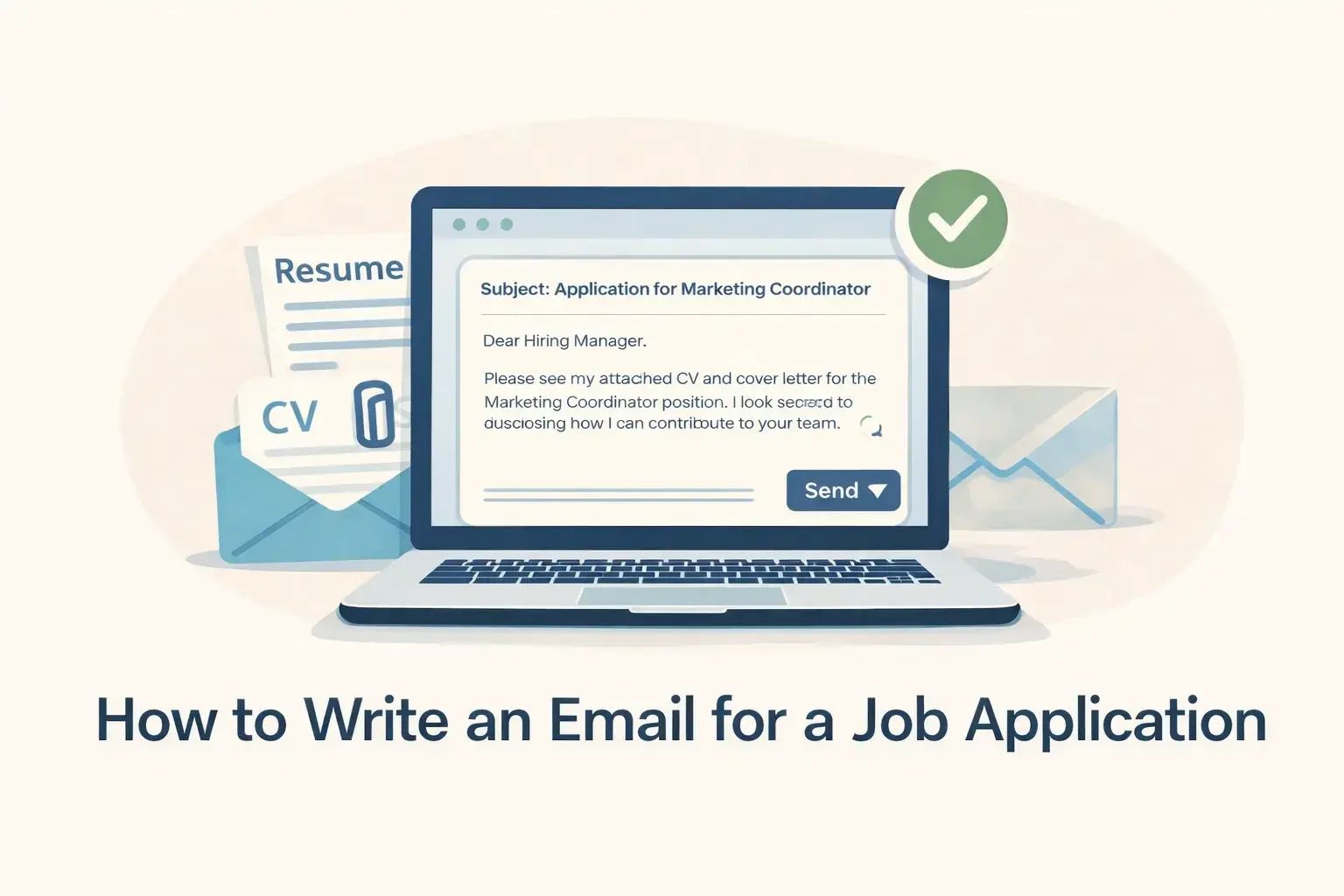
Begin with a concise subject line. It should clearly indicate your intent and include your name and the job title. This helps the recipient quickly identify your email.
The greeting sets the tone for your message. A formal salutation, ideally using the hiring manager’s name, conveys professionalism.
Your opening paragraph introduces you and the position you’re applying for. Keep it concise and engaging to capture the reader’s interest.
The body of your email is crucial. Highlight your skills and experiences that match the job requirements. Use specific examples to demonstrate your qualifications.
Conclude with a call to action. Express your eagerness for an interview and thank them for considering your application. Input (British English):
Key components to include are:
- Subject line
- Greeting
- Introduction
- Skills and experience highlights
- Closing statement
Step-by-Step Guide: How to Write a Job Application Email
Crafting a job application email requires precision and attention to detail. Each part of the email serves a distinct purpose in showcasing your professionalism and enthusiasm for the role.
Start by carefully considering the subject line. It should be direct and include both your name and the position title. This alerts the recipient to the email’s content immediately.
Next, opt for a formal greeting. When possible, address the hiring manager by name, using a salutation like “Dear Mr. Smith.” This adds a personal touch.
In your introduction, briefly state who you are and the position you’re applying for. A well-written introduction sets the stage for the rest of your email.
In the body of your message, highlight key skills and experiences. Focus on those that align most closely with the job description. Use bullet points for clarity and impact:
- Relevant technical skills
- Significant achievements
- Unique contributions
Attachments are also important. Ensure that your CV and any other necessary documents are included, using a common file format like PDF.
Conclude with a succinct closing. Express your gratitude for the opportunity and your eagerness for the next steps. Sign off with a professional closing such as “Sincerely” or “Best regards”.
These steps will ensure your application is both professional and compelling.
1. Write a Clear Subject Line
The subject line is your first opportunity to make an impression. It should state your intent and provide crucial details.
Include your name and the job title to ensure clarity. A good subject line might look like:
- “Application for Marketing Manager – John Doe”
This helps the hiring manager quickly identify your email among the many they receive.
2. Use a Professional Greeting
A professional greeting sets the tone for the rest of your email. It creates a positive first impression.
Use the hiring manager’s name if known, preceded by “Dear” or “Hello.” Addressing them properly shows respect. Example greetings include:
- “Dear Ms. Johnson,”
- “Hello Mr. Lee,”
Avoid casual greetings like “Hi” or “Hey.”
3. Craft a Compelling Introduction
Begin your email with a concise and impactful introduction. Clearly state the position you’re applying for and who you are.
Mention how you came across the job opportunity. Highlight your enthusiasm for the role in a few sentences.
A strong introduction can set you apart from other candidates straightaway.
4. Highlight Your Skills and Experience
The body of your email should spotlight your relevant skills and achievements. Tailor your points to match the job description.
Use specific examples that demonstrate your capabilities. Input (British English):
Consider bullet points for clarity:
- Led a project team that increased sales by 15%
- Proficient in relevant software tools like Excel and Photoshop
This approach makes it easy for the reader to assess your suitability for the position.
5. Attach Your CV and Documents
Ensure that your CV and any additional documents are attached to the email. Use easily accessible formats like PDF to avoid compatibility issues.
List your attachments in the email body for transparency:
- CV (John_Doe_CV.pdf)
- Cover Letter (John_Doe_CoverLetter.pdf)
Double-check to ensure all documents are actually attached before sending.
6. End with a Strong Closing
Your closing should be polite and forward-looking. Express gratitude and state your desire to discuss further.
Sign off with a professional closing phrase. Examples include:
- “I look forward to the possibility of discussing this role further.”
- “Thank you for considering my application.”
Your full name should follow the closing to maintain a formal tone.
Common Mistakes to Avoid in Job Application Emails
When crafting a job application email, it’s crucial to steer clear of common errors. These mistakes can undermine your professionalism and lower your chances of landing the job.
Avoid overly casual language or slang, as this can seem unprofessional. Sloppy grammar and spelling errors can also harm your credibility. It’s essential to double-check your email before hitting send.
Additionally, never use generic templates without customisation. Tailor each email to the specific job and company. Here are a few more pitfalls to watch out for:
- Using a professional email address
- Forgetting to attach necessary documents
- Including irrelevant information
By steering clear of these mistakes, you’ll enhance your email’s impact and present yourself as a top candidate.
Sample Job Application Email Template
Creating a clear and professional job application email is crucial. A template can provide a useful starting point, ensuring you include all necessary components.
Begin with a proper greeting, introducing yourself and stating the position you’re applying for. Then, highlight your key skills and experiences relevant to the job. Conclude with a call to action and professional closing.
Here is a basic template to guide you:
Subject: Application for [Job Title] – [Your Name]
Greeting: Dear [Hiring Manager’s Name],
Introduction: I am writing to express my interest in [Job Title] as advertised on [Platform].
Body: With [X years] of experience in [Industry/Field] and skills in [Key Skills], I am confident in my ability to contribute to [Company Name].
Closing: Thank you for considering my application. I am eager to discuss how my skills align with [Company Name]’s goals.
Signature: Yours sincerely, [Your Full Name]
This template highlights your strengths and makes a compelling case for your candidacy. Adjust it to suit each job application for better results.
Tips for Following Up After Sending Your Application
After submitting your job application email, it’s important to follow up. This shows your interest and keeps your application at the forefront of the hiring manager’s mind.
Wait at least one week before sending a polite follow-up email. Keep it brief and professional. Use this opportunity to reiterate your interest in the position.
Key tips for following up:
- Timing: Allow a week or two after your initial email.
- Message: Be courteous and brief, expressing gratitude for their consideration.
- Purpose: Reconfirm your interest and enthusiasm for the role.
These follow-up tips can enhance your job search strategy, showing persistence without becoming intrusive.
Frequently Asked Questions About Job Application Emails
Many job seekers have questions about writing the perfect job application email. Addressing these concerns can help you craft a more effective message.
Common questions include:
Clear and concise, with your name and job title.
Ideally, a few short paragraphs.
Yes, a polite follow-up can demonstrate continued interest.
These FAQs offer insight into common challenges. By understanding these points, you can improve your job application email skills. This knowledge can set your application apart from others.
Final Thoughts: Making Your Job Application Email Stand Out
Writing an effective job application email is an essential skill. It’s your chance to leave a great first impression. Convey professionalism, interest, and a fit for the role.
A standout email is tailored to the company. It reflects research, thoughtfulness, and customisation to the specific job. This effort demonstrates genuine interest and commitment.
Many employers also expect a short, professional message when you email your CV, as outlined in Indeed’s job application email guidance.
Before sending, double-check for errors and readability. Ensure the tone is professional yet enthusiastic. These details contribute to a polished final product.
To make your email memorable:
- Show genuine enthusiasm for the role.
- Provide specific examples of your achievements.
- Use clear and concise language.
These strategies can help your application rise to the top. Remember, thoughtful communication is a strong step towards success.