Your domain name is your online address, your brand’s first impression, and the foundation for your website and email. If you are building a presence in South Africa, the right choice can boost trust with local customers, improve visibility in search, and make day-to-day operations simpler. If you want to buy a domain name in South Africa, your domain choice affects trust, search visibility, and brand perception. This guide walks you through how to pick the best domain, where to buy it, how to check availability, and why some extensions cost less than others.
Start with a clear purpose
Before you search, get specific about what your domain needs to do.
- Audience: Are you serving South Africans first, or a global market?
- Brand: Do you need an exact match to your business name, or a keyword variation?
- Longevity: Will the name still make sense as you grow?
- Email: Will you use it for professional email, like info@yourbusiness.co.za?
Clarifying these points helps you choose the correct extension and avoid a name you outgrow.
Choose the right extension for South Africa
Your extension sends a trust signal. Here are the common options and when to use them:
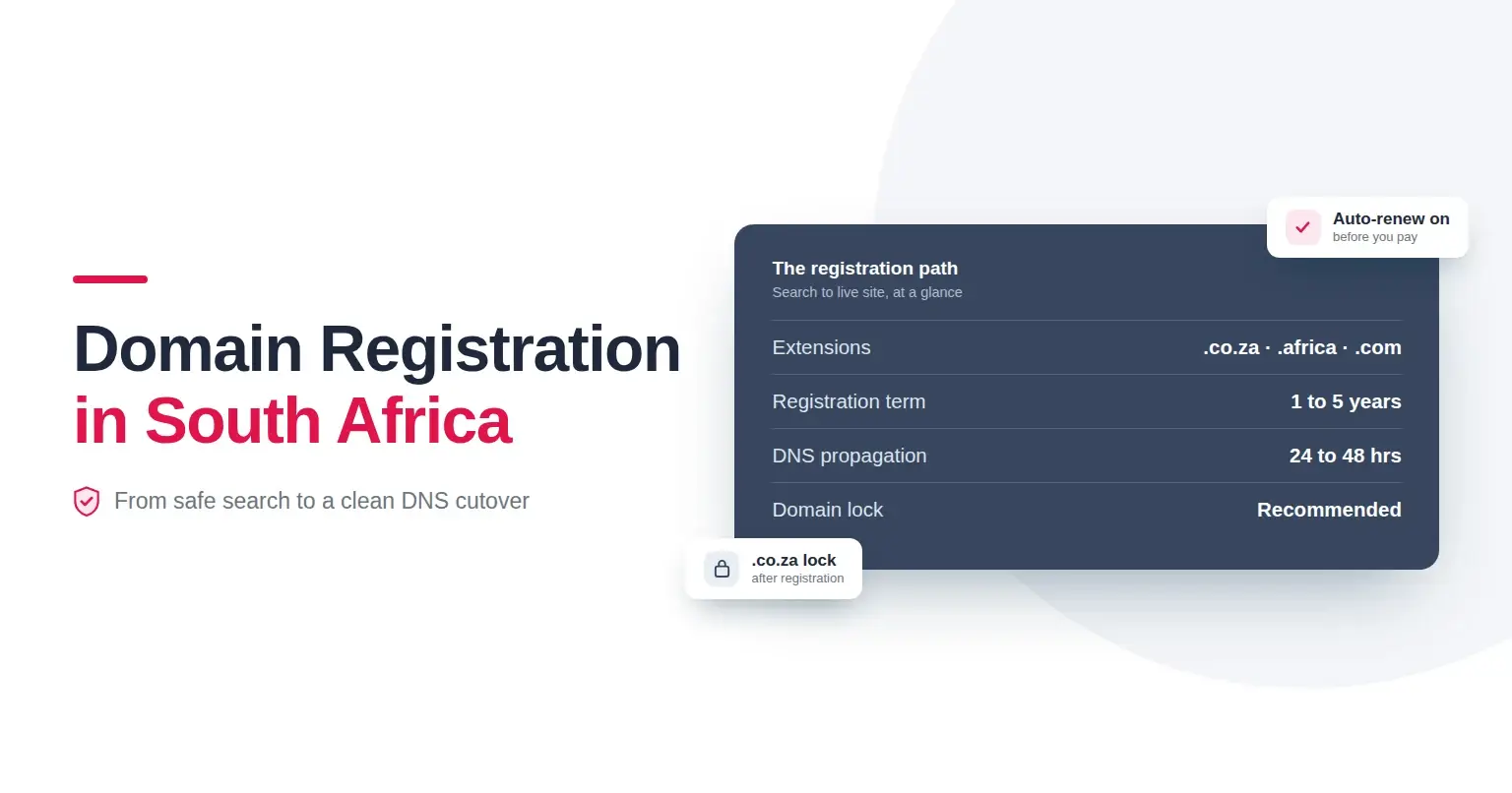
- .co.za: The default choice for South African businesses. It signals local presence and often helps with local SEO. If you sell to South Africans or operate here primarily, this is a strong, affordable pick.
- .africa: Great for pan African brands, NGOs, or companies with regional reach.
- .com: A global standard that works well if you plan to expand internationally or sell to multiple markets.
- Industry or niche extensions: Options like .store, .org, .tech, or .app can add meaning, but check availability and long-term costs.
Tip: If budget allows, register your primary .co.za and a secondary .com or .africa. You can redirect the extras to your main site to protect your brand.
Why the .xyz domain is so cheap
You will often see .xyz priced lower than .com or .co.za. There are three main reasons:
- Promotional pricing: Registries sometimes run aggressive discounts to grow adoption quickly.
- Perception and demand: .xyz is newer and has lower mainstream demand than .com or .co.za, which pressures prices down.
- Renewal differences: Intro prices can be low, while renewals may be higher than year one. Always compare the first-year price to the renewal rate before you commit.
Cheap does not mean bad, but consider audience expectations. A .co.za may immediately reassure a local customer, while .xyz can feel experimental. Pick based on brand fit, not price alone.
How to check if a domain is available
You have two easy ways to confirm availability.
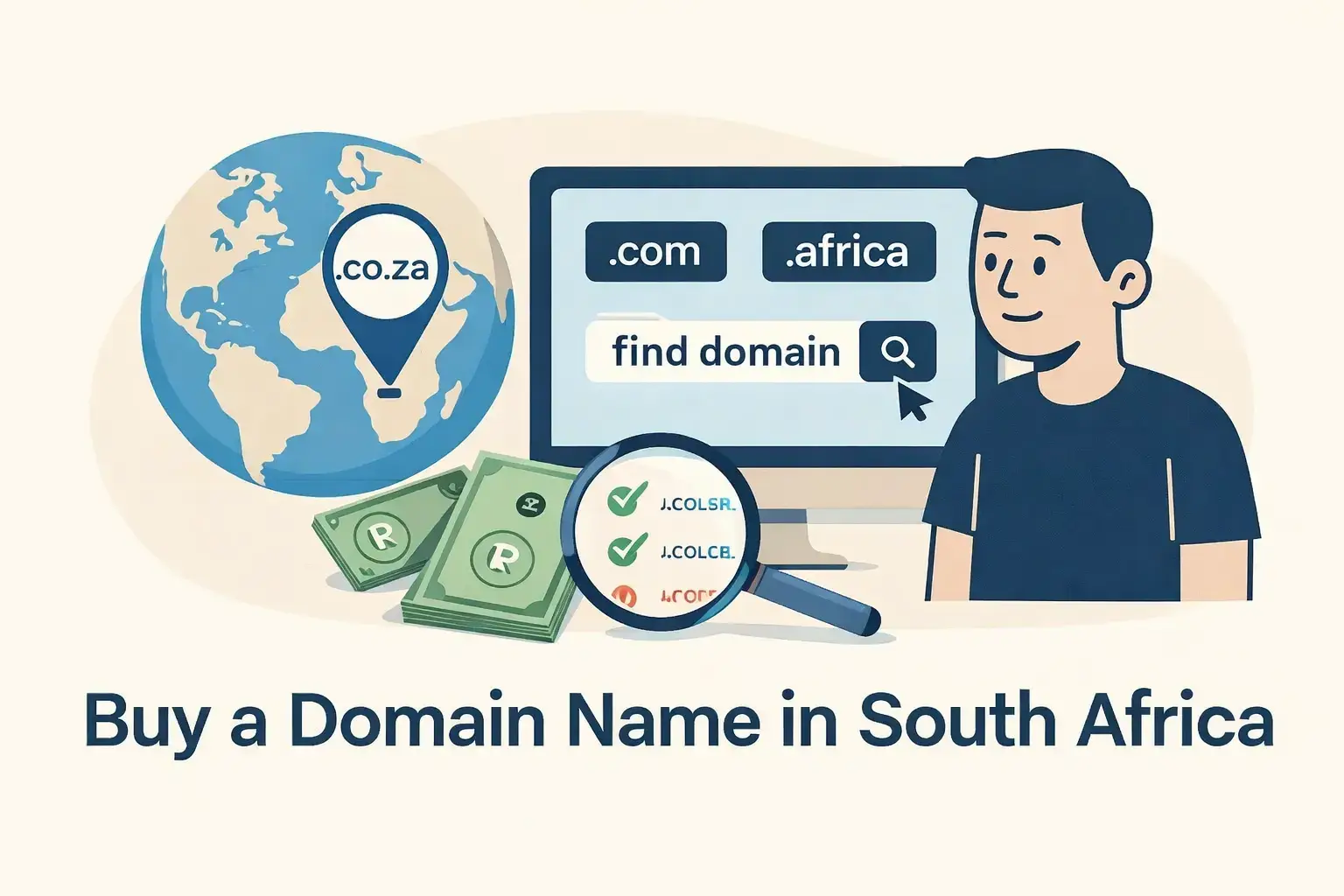
- Use a domain search tool: Enter your idea and see instant results, plus suggestions if your first choice is taken. You can run a fast domain check, compare extensions, and proceed to checkout in one flow.
- Look up WHOIS details: If a name appears taken, a WHOIS search shows registration status and dates, which helps you decide whether to try a different version or approach the current owner.
If you want a simple path to search and register in one place, use a trusted provider’s domain search and WHOIS tools to check the domain name availability and confirm whether you can buy it immediately.
How to Buy a Domain Name in South Africa
Choose a registrar that focuses on South African registries and offers helpful support, not just low prices. Look for:
- Local expertise: Knowledge of ZADNA rules and .co.za policies helps avoid compliance surprises.
- Clear pricing: Transparent renewal fees with no hidden extras.
- Integrated tools: DNS management, SSL options, email hosting, and easy nameserver updates in one account.
- Reliable support: Friendly human help when you need it, plus a ticket system for after-hours issues.
You can register and manage your domains with a South African provider that offers local performance and support. This keeps your domain, DNS, hosting, email, and SSL in one dashboard, which reduces admin and speeds up changes.
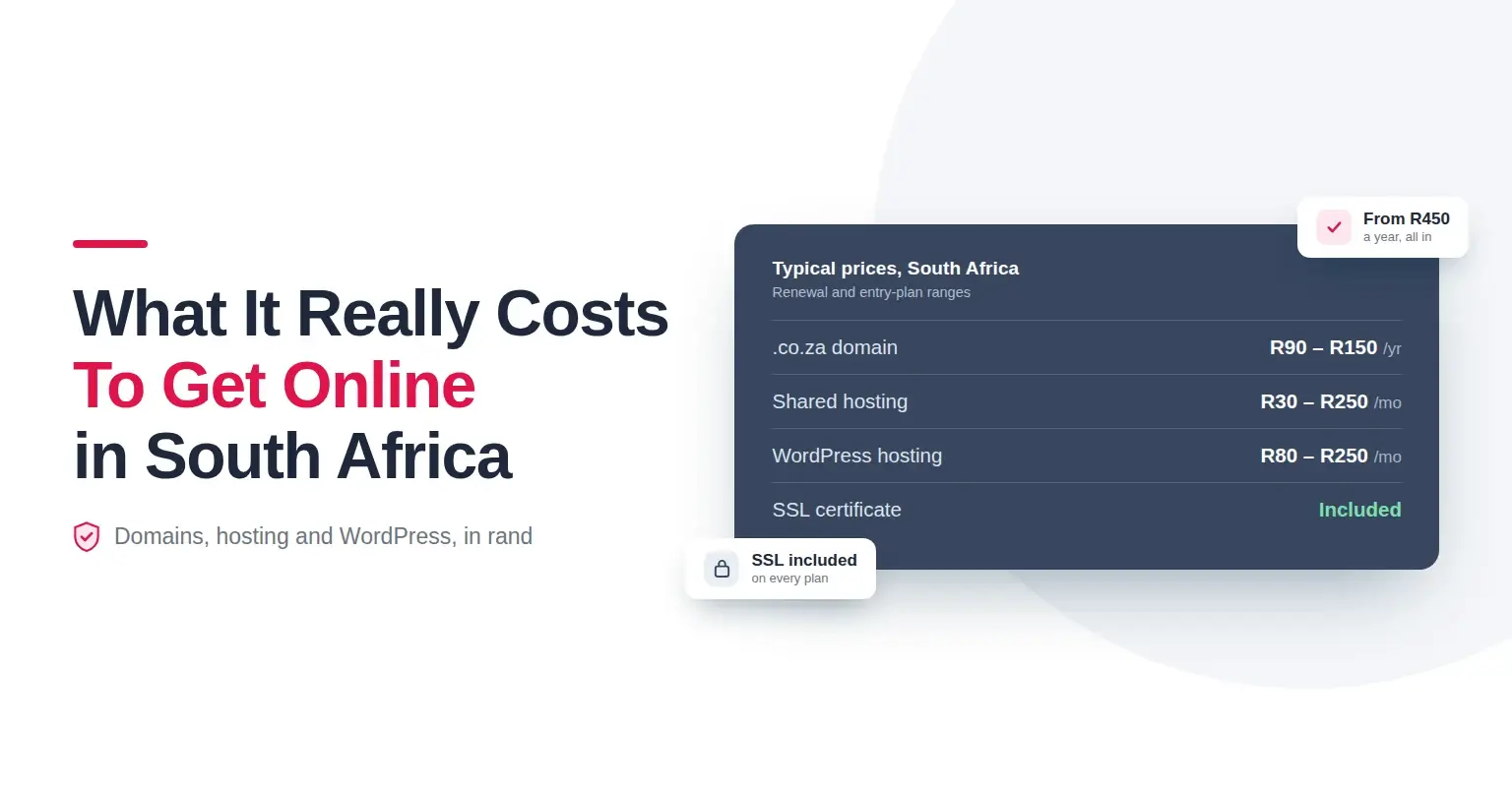
See our .co.za domain pricing guide for local registration costs.
Best practices for naming
Follow these guidelines to get a memorable, future-proof name.
- Keep it short and simple: Aim for clear, pronounceable, and easy to type.
- Avoid hyphens and numbers: They are hard to say and easy to mistype.
- Match your brand: Exact match is ideal, but a close variation is fine if it is cleaner and shorter.
- Think long term: Choose a name that still works if you add services or expand regions.
- Check trademarks: Avoid names that are confusingly similar to well-known brands or government entities to prevent disputes or suspensions.
If your perfect name is taken, try these tweaks:
- Add a relevant word before or after your brand, like get, try, or group.
- Use a location modifier, like capetown or sa, if it fits your brand.
- Consider a different extension that still aligns with your audience.
Buying steps, from search to checkout
Here is a simple process to follow.
- Brainstorm five to ten names that fit your brand.
- Use a search tool to check the domain name and related extensions.
- Compare the first-year price and the renewal price, then choose a primary domain.
- Consider registering a backup extension to protect your brand.
- Add basic privacy and security where available, then proceed to checkout.
- Set nameservers or use the registrar’s DNS Manager to add A, CNAME, and MX records.
- Turn on auto-renew and add a reminder 30 days before expiry.
Allow 24 to 48 hours for DNS propagation after you update nameservers. If nothing changes after 48 hours, contact support for help.
Local vs international registration, what to consider
Registering with a South African focused provider offers practical advantages.
- Latency and performance: Local hosting and DNS can improve speed for South African visitors.
- Policy alignment: Local teams know .co.za procedures, transfer rules, and verification requirements.
- Support culture: Time zones, payment methods, and business hours match how you operate.
- Brand trust: A .co.za on a local platform signals you are here for the long term.
International registrars are fine when you need rare extensions or specific bulk features, but if your customers are here, local makes daily life simpler.
Security and ownership basics
Protect your new asset from day one.
- Enable domain locking on .co.za to prevent unauthorised transfers.
- Use strong, unique passwords and two-factor authentication on your account.
- Keep your registrant details accurate to avoid suspension or failed renewals.
- Store renewal reminders in more than one calendar.
- Back up your DNS records and website content regularly.
If a name closely resembles a government body or protected term, expect additional verification or possible rejection. This aligns with registry rules designed to prevent abuse.
Cost tips and avoiding surprises
Domains are affordable, but costs vary.
- Compare first year versus renewal: A low intro price can jump in year two.
- Register for multiple years: Lock current rates and reduce admin.
- Budget for add-ons: Privacy, DNS features, and SSL, noting that many hosting plans include SSL.
- Watch promotions: Seasonal specials can reduce costs on hosting plus domain bundles.
Quick answers to common questions
Use a reputable South African registrar that offers clear pricing, local expertise, and integrated DNS, email, SSL, and hosting. Buying and managing everything in one place saves time and reduces errors.
The registry often runs promotions, demand is lower than .com or .co.za, and the first-year price is frequently discounted. Always check renewal fees to avoid surprises.
Search the name with a registrar’s availability tool, then confirm with a WHOIS lookup if needed. If it is available, you can register it immediately. If it is taken, the tool will suggest alternatives or different extensions.
Summary
Your domain choice affects trust, search visibility, and brand recall. For South Africa first businesses, .co.za is the most natural choice, while .com or .africa can support growth beyond local borders. Use a local registrar for straightforward compliance, friendly support, and integrated tools. Keep the name short and memorable, verify availability with a search and WHOIS, compare renewal pricing before you buy, and lock in multi-year registrations to protect your brand. When you are ready, run a quick domain check, register your first choice, and set up DNS and email so you can start serving customers with a professional online presence.